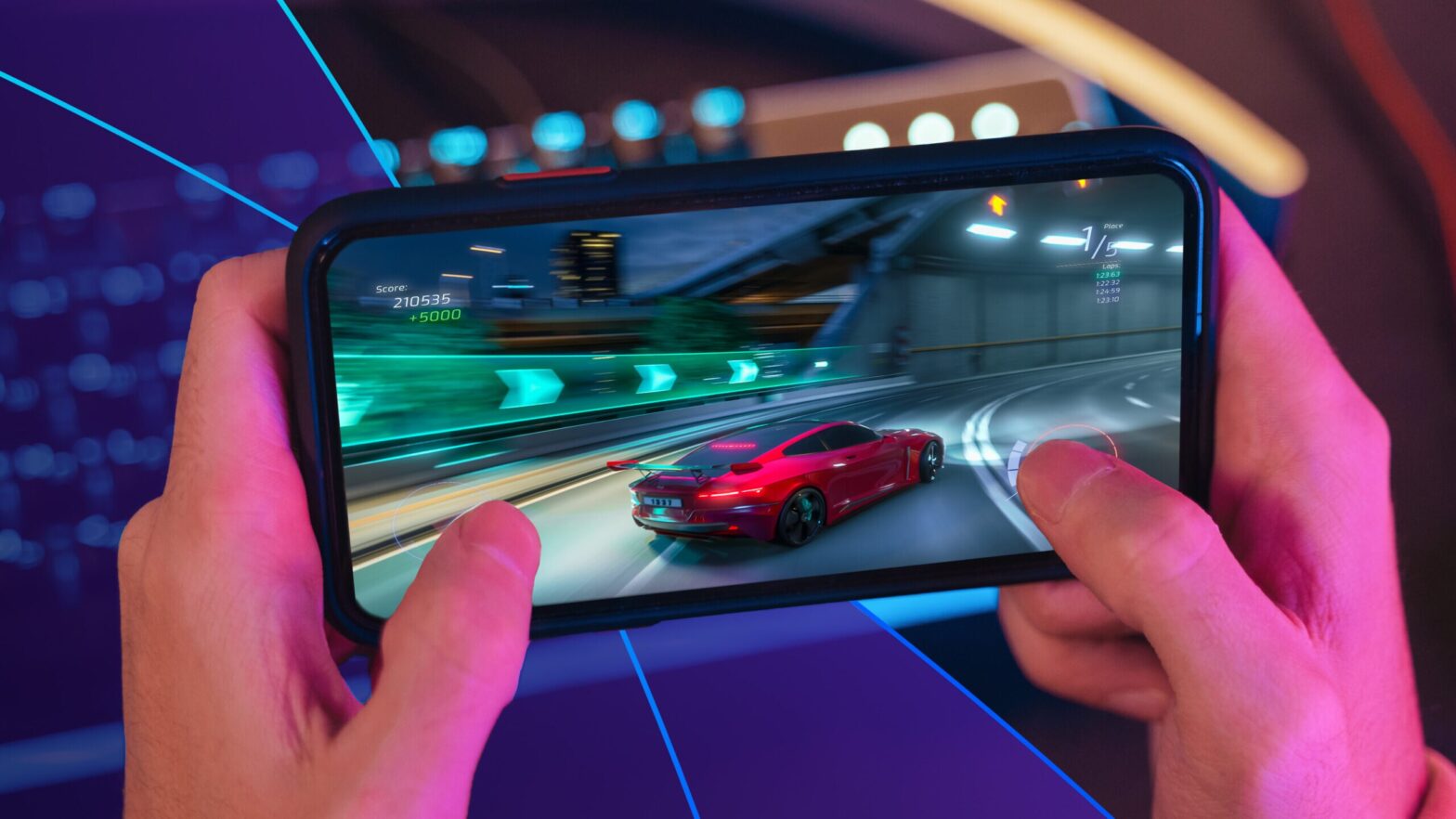
Mobile gaming has long suffered a visual gap compared to consoles and PCs. At GDC 2026, Arm demonstrated that gap is closing rapidly—not through faster traditional GPUs alone, but through dedicated neural processing integrated directly into graphics hardware.
Mobile Gaming Leapfrog with Neural Processing

Arm’s approach places NPU-class neural accelerators inside future GPUs, enabling efficient whole-tensor workloads that integrate cleanly with existing rendering pipelines. This architectural alignment means developers can replace compute shaders with neural accelerator dispatches using familiar tools, dramatically lowering adoption barriers.
The showcase was Project Buzz, a reference game demonstrating what becomes possible when neural acceleration is embedded throughout the rendering pipeline. Real-time ray-traced lighting, complex geometry, and advanced shading all ran within mobile power budgets—a combination previously considered impossible.
Sergio Alapont, Arm’s Principal Engineer, framed the breakthrough in practical terms: “Mobile teams are constantly trading visual ambition against frame rate, thermals, and battery life. Neural graphics changes that equation. Instead of cutting features, we can reallocate GPU budget using neural acceleration to maintain quality while staying within real production constraints”.
Neural Frame Rate Upscaling doubles perceived smoothness through neural interpolation, while Neural Super Sampling replaces traditional upscaling with lightweight networks that improve image quality while reducing GPU load. Both techniques leverage motion data and temporal information already present in rendering pipelines, requiring minimal additional engineering.
For game developers, the timing is critical. Willen Yang, another Arm presenter, advised: “Developers need to start experimenting now with the Neural Graphics Development Kit, so they are ready to use AI to power their game titles on mobile with neural accelerators, delivering higher visual quality with lower power and GPU load”.
The hardware timeline aligns with this advice. As neural accelerators become standard in mobile chipsets, the studios that have already built intuition around frame structuring, motion data handling, and neural scheduling will be positioned to deliver experiences that outpace competitors still using traditional rendering approaches.